StartMail Review 2026 — Unlimited Aliases & Strong Privacy
A practical review of StartMail in 2026 — looking at privacy, encryption, aliases, pricing, and how it compares to Proton Mail for everyday private email.

If you care about privacy, you eventually reach a crossroads: you can keep using email platforms that monetise attention and behaviour… or you can switch to a service built around the idea that your inbox should belong to you, not an ad network. StartMail sits firmly in the second camp.
In this review, I explore what StartMail gets right, where it still feels opinionated, and whether it’s a worthwhile upgrade if you’re currently using Gmail, Hey, or Proton Mail.
This comes at a time where expectations around privacy and digital trust are shifting — something I wrote about in Rethinking Digital Trust 2026: Privacy Reset.
On this page
Key Takeaways
- StartMail is a strong private email option built around privacy, GDPR protections, and unlimited aliases.
- It doesn’t scan or monetise your inbox — there are no ads, no tracking, and no behavioural analysis.
- Unlimited disposable aliases are a practical way to control exposure when signing up to services.
- No permanent free tier, which will put some people off — but the paid model makes sense if you want email that respects you.
- If you like Proton Mail but want fewer tiers and simpler pricing, StartMail is worth a serious look in 2026.
Why look at StartMail at all?
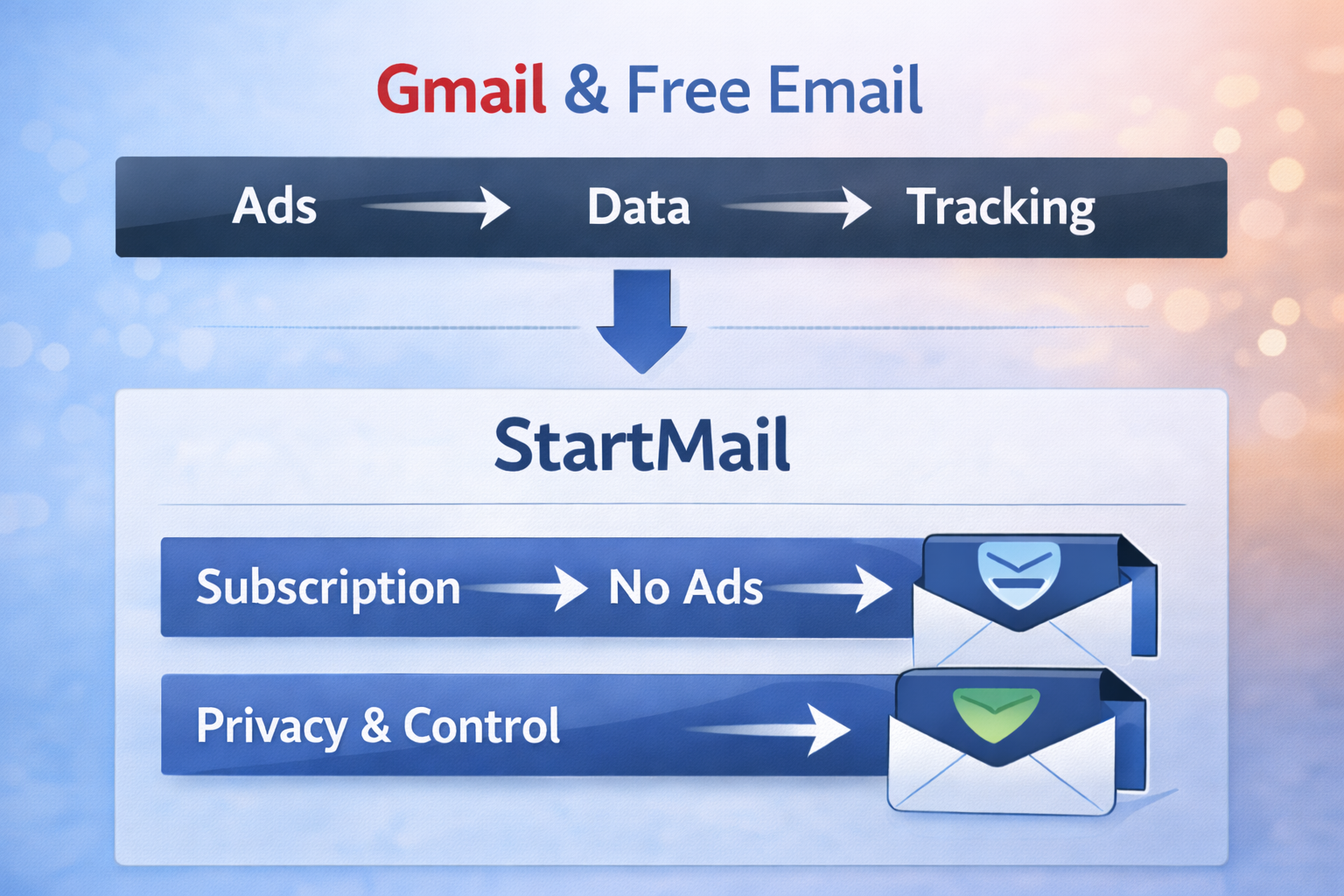
Most mainstream email platforms are built on advertising and behavioural analysis. Your inbox becomes a source of insight, not just a place you read messages.
Email isn’t going away — but the why and how we use it have shifted dramatically over the last decade. If you’re wondering whether email as a communications tool still makes sense, I explored that topic in depth here → Is email here to stay?
StartMail takes the opposite approach: pay for the service, and the service works for you — not advertisers, partners, or data brokers.
That alone keeps StartMail relevant in 2026. With privacy regulation tightening and inboxes still full of marketing pixels, paid private email has shifted from a niche preference to a normal expectation among people who value control.
Setup and first impressions
StartMail works out of the box through webmail, and you can connect your existing email client (Apple Mail, Outlook, Thunderbird) via IMAP/SMTP.
The interface is clean and familiar — closer to Fastmail than Proton Mail.
No onboarding tour, no complexity — just email, encryption options, and a strong alias system.
If you’ve used Gmail for years, nothing here feels overwhelming.
If you’re coming from Proton Mail, the lighter interface and flexibility may feel refreshing.
Features — What StartMail Actually Offers
StartMail doesn’t try to reinvent email — instead, it focuses on delivering a private, flexible inbox with practical tools that help you protect your identity. Here are the core features that define the service in 2026:
Private, ad-free inbox
No ads, no behavioural profiling, no data monetisation.
StartMail operates on a paid-only model, which means your inbox isn’t dependent on attention-based revenue or data extraction.
Unlimited disposable aliases
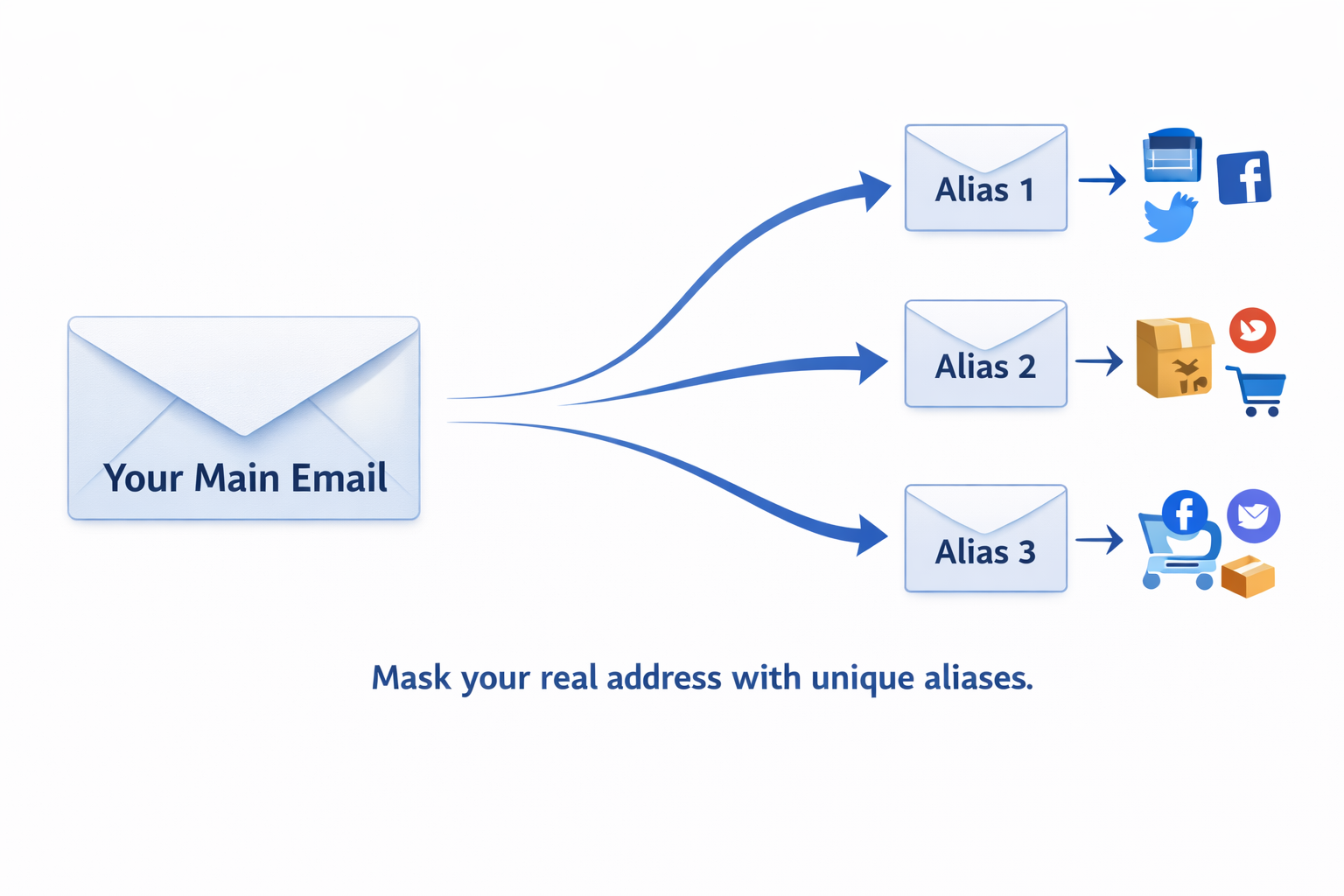
Create as many aliases as you want, use them everywhere you sign up, and delete them when they leak or become noisy.
This gives you real-world identity control, not just inbox filtering.
- Keep your primary address private
- Isolate sign-ups from each other
- Track where spam originates
- Shut down abuse without changing email accounts
(You could run an entire digital life through aliases if you wanted — and a surprising number of people do.)
PGP encryption support
StartMail supports OpenPGP encryption, allowing encrypted communication with anyone who uses compatible tools.
Encryption isn’t forced — you enable it when needed. This gives you flexibility without locking you into a single ecosystem.
- Generate keys inside StartMail or use your own
- Encrypt selectively when needed
- Send encrypted mail beyond the StartMail network
If you want automatic E2EE across recipients, Proton Mail still wins on convenience — but StartMail wins on flexibility and compatibility.
Works with your existing email clients
Because StartMail supports IMAP and SMTP, it fits into your current workflow:
- Apple Mail
- Outlook
- Thunderbird
- FairEmail
- K-9 Mail
- MailMate
- and others
No proprietary app means StartMail doesn’t dictate how you read email — and that flexibility matters if you rely on integrations, rules, or specific clients.
Custom domain support
You can bring your own domain and send from addresses that reflect your own identity — without using a platform’s branding in the address.
This matters if you:
- run a small business
- write publicly
- want a consistent address for the long term
- or simply prefer you@yourdomain.com to 123@yourdomain.com
Custom domains also pair neatly with aliases — you can run multiple identity streams under one domain.
Tracker and pixel blocking
Many newsletters embed tracking pixels that attempt to profile your behaviour; Ryte Wiki has a great explanation on how pixels work
StartMail automatically blocks tracking pixels and similar mechanisms used by newsletters and marketers to infer open rates, geolocation, and behavioural profiling.
This turns email back into communication, not surveillance.
IP address protection
Outgoing messages do not reveal your IP address, reducing the exposure of personal network information — a common oversight in many email clients and workflows.
Server location & jurisdiction
Emails are stored in the Netherlands, under EU GDPR — still one of the strongest privacy frameworks available to consumers.
This provides clear rights around:
- data access
- erasure
- portability
- consent
- and limiting processing
Account recovery that doesn’t compromise privacy
StartMail offers recovery options without storing unnecessary personal data.
There’s no forced phone number requirement and no behavioural fingerprinting masquerading as security.
For comparison:
- Gmail → phone tied to identity
- Proton → optional phone/identity verification in some cases
- StartMail → email-based + recovery code approach
Storage
The personal plan offers ~20 GB of storage — enough for most users, especially given that unlimited aliases encourage lightweight inboxes instead of hoarding.
Feature summary — at a glance
| Feature | StartMail | What it means in practice |
|---|---|---|
| Unlimited aliases | ✔ | Real identity control + spam protection |
| PGP encryption | ✔ | Flexible encrypted comms beyond one ecosystem |
| IMAP/SMTP | ✔ | Use your own client, rules, and workflow |
| Custom domains | ✔ | Your own identity, not platform-owned branding |
| Tracker blocking | ✔ | Fewer behavioural insights leaked to senders |
| IP protection | ✔ | Less metadata exposure in headers |
| App ecosystem | ✘ | Uses your client; flexibility over native apps |
| Dark Web Monitoring | ✘ | Proton advantage — account risk insight |
| E2EE by default | ✘ | Choose when to encrypt; not automatic |
| Permanent free plan | ✘ | Paid-only to avoid ad-based incentives |
Bottom line on features
StartMail doesn’t overload you with functionality, but the tools it ships with are the ones that matter most if your goal is privacy + control rather than ecosystem convenience.
- It’s not trying to be Gmail.
- It’s not trying to be Proton Mail.
- It’s trying to be private email you control — with smart identity protection built in.
Unlimited aliases — genuinely useful
Aliases in StartMail aren’t just an extra address — they’re a genuinely useful privacy tool. They let you sign up for services without revealing your real inbox, giving you control over identity exposure and spam sources — here’s how email aliases work in practice.
My workflow:
- Create an alias for every service I don’t fully trust
- If that alias leaks or becomes noisy, delete the alias — not my identity
- Keep my primary inbox clean, private, and quiet
If you’ve ever:
- had your main email sold or leaked,
- wanted to trace who shared your address,
- or avoided signing up for tools because you didn’t want spam,
StartMail’s alias system is the solution you actually end up using.
If you’ve ever had your email leaked, sold, or flooded during seasonal spam waves, aliases give you a way to isolate the damage and shut it down without changing your inbox. I wrote about my breakdown of holiday inbox overload → my breakdown of holiday inbox overload
Compared to Proton Mail, StartMail’s aliases are more generous and less tied to subscription tiers.
A Tour of the StartMail Interface
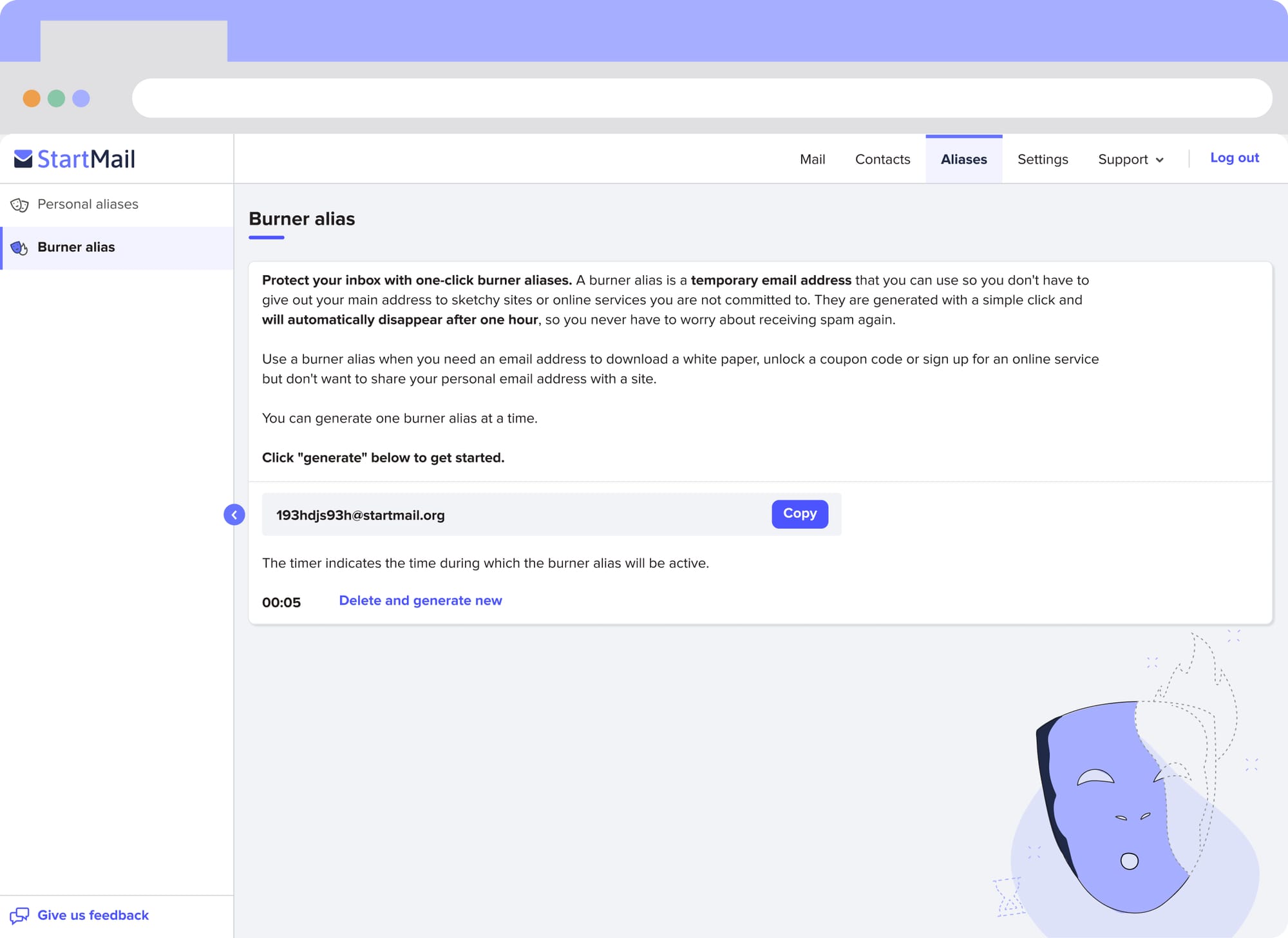

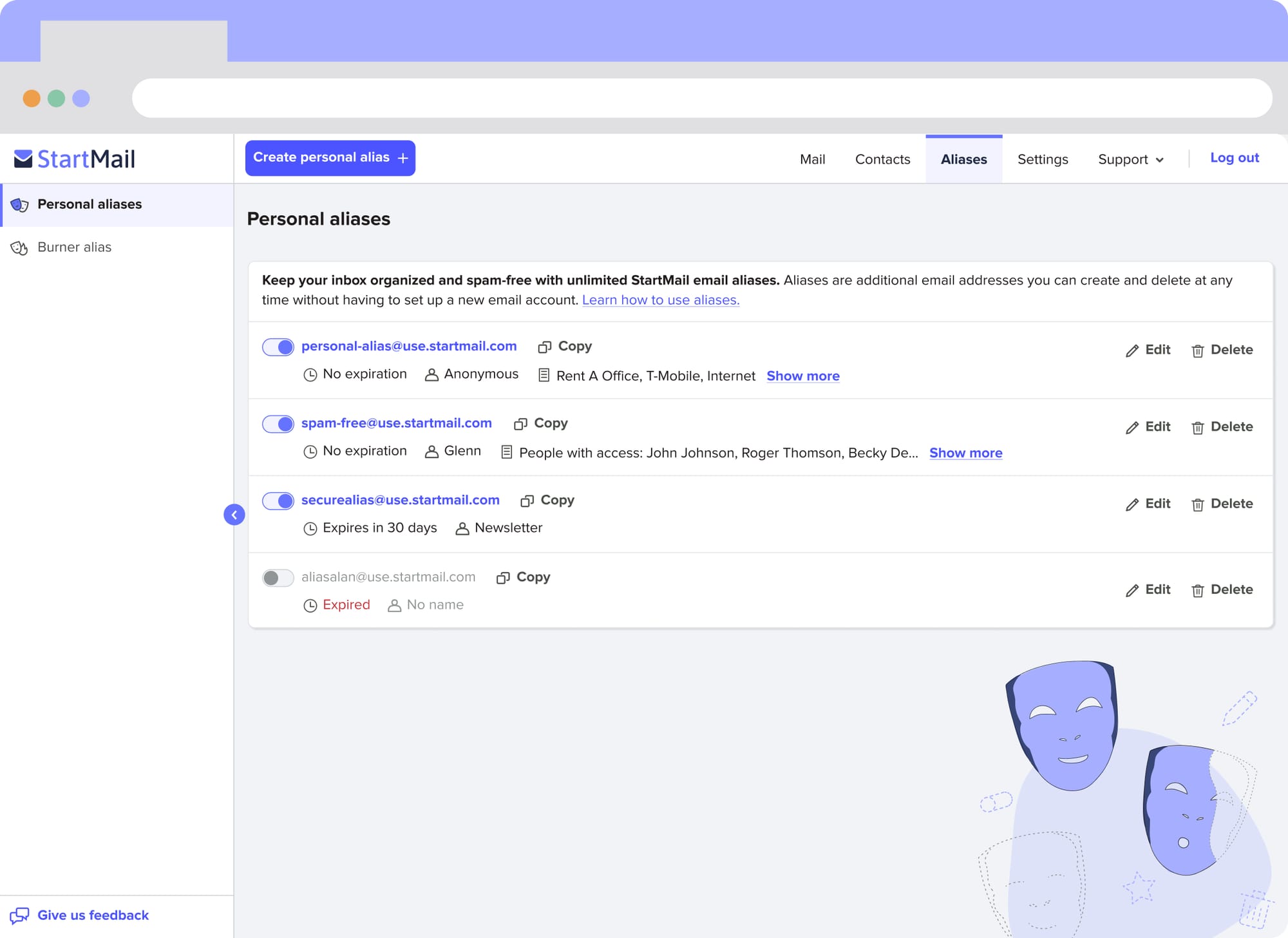
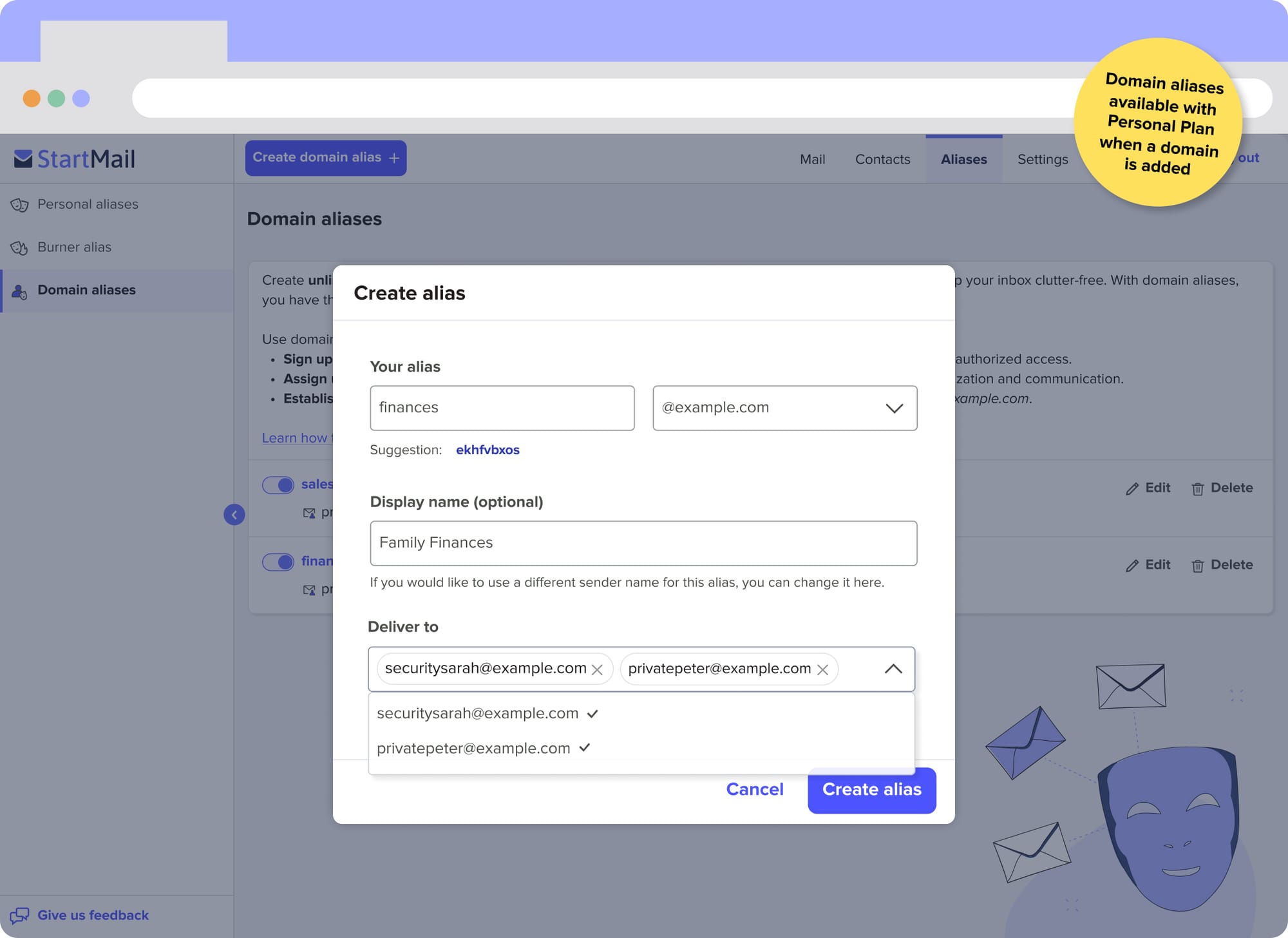
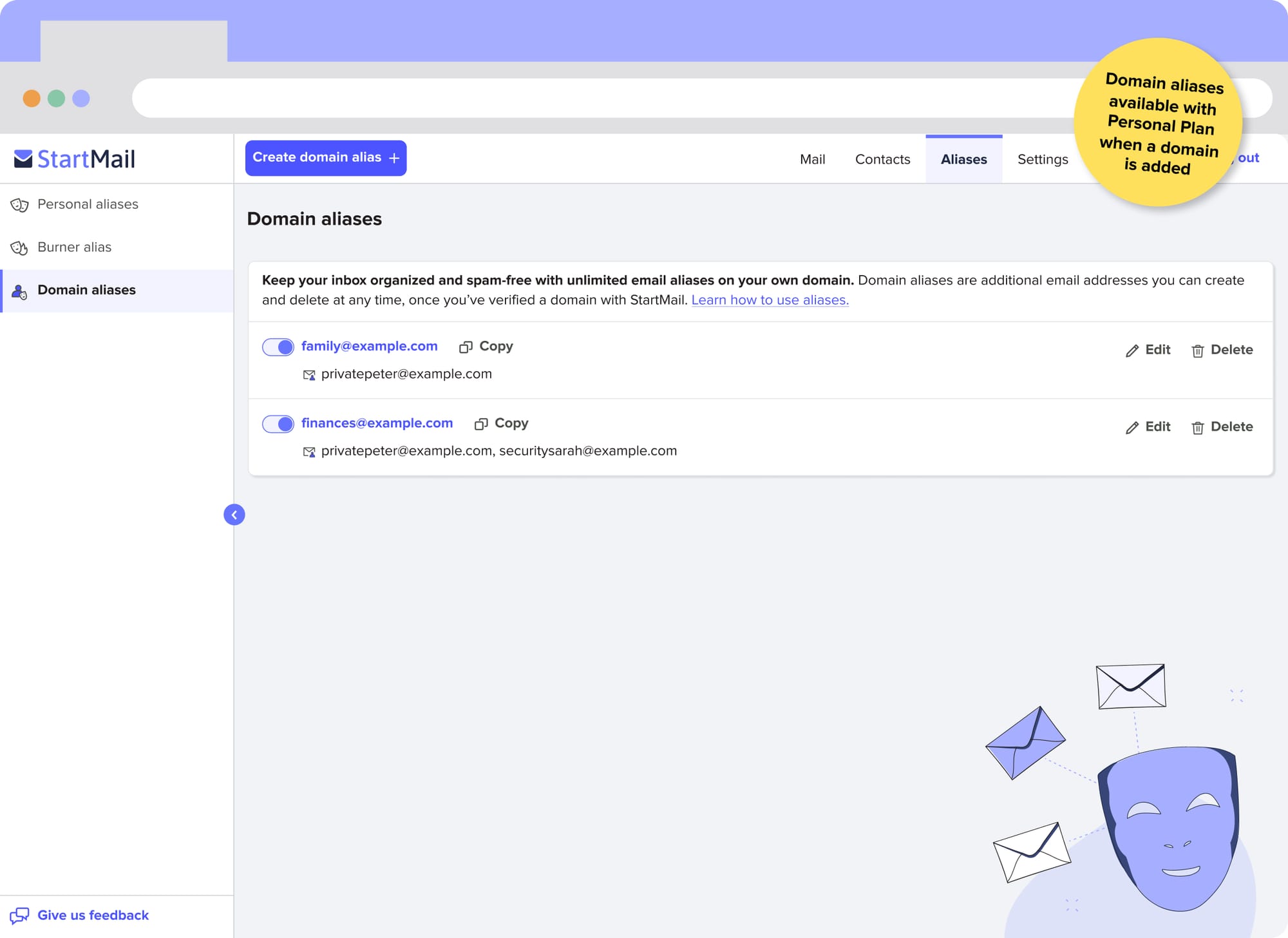
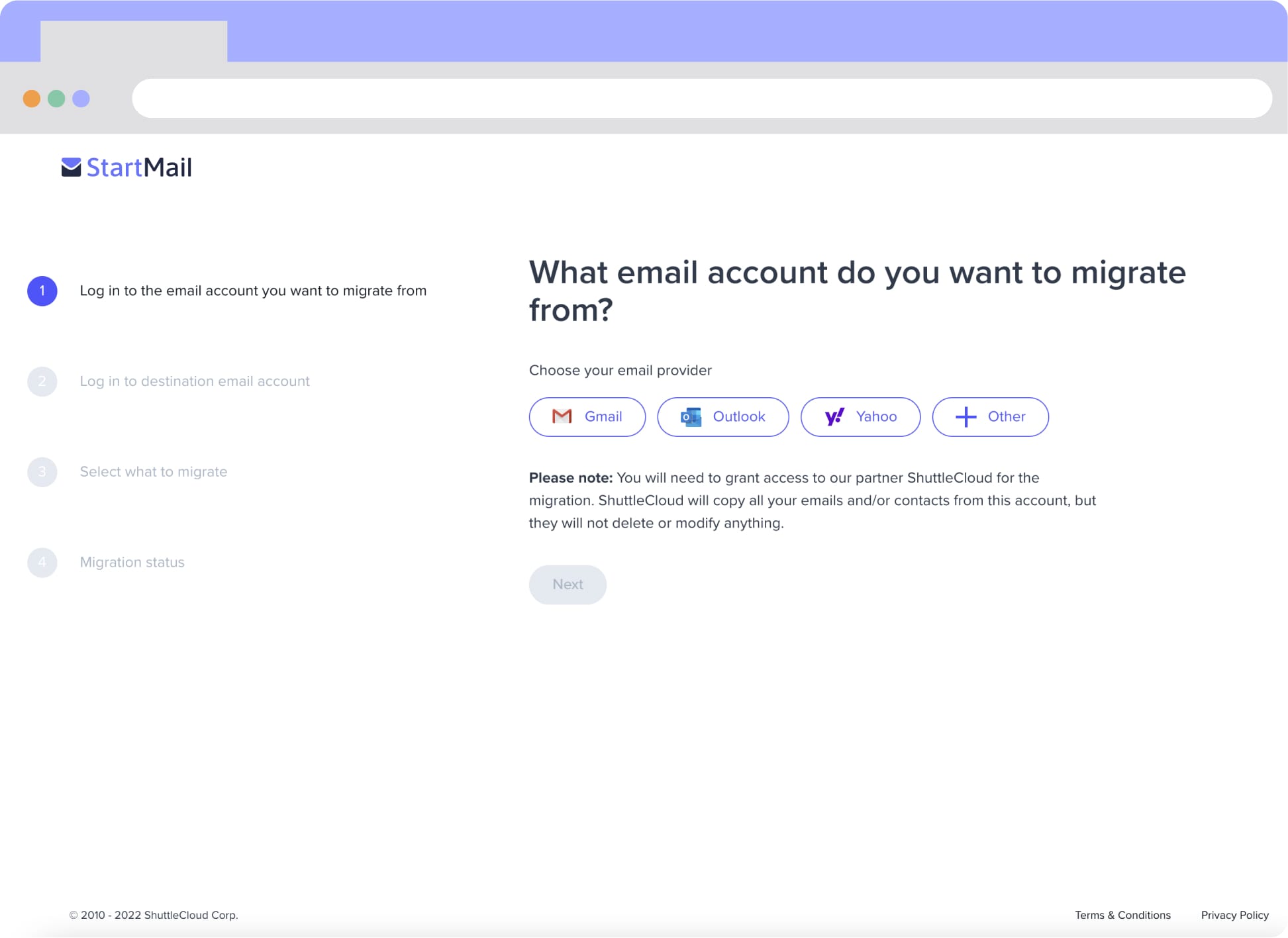
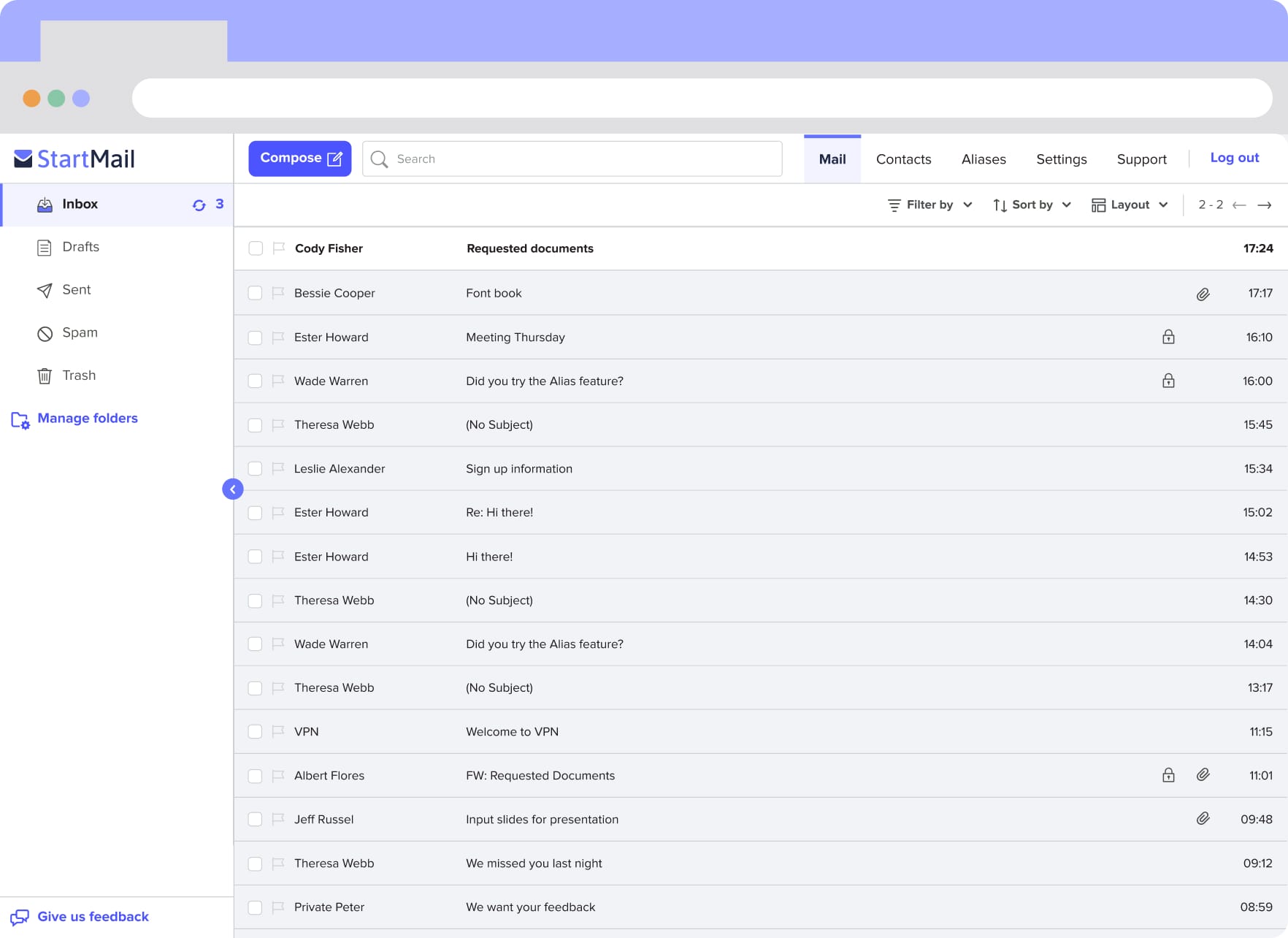
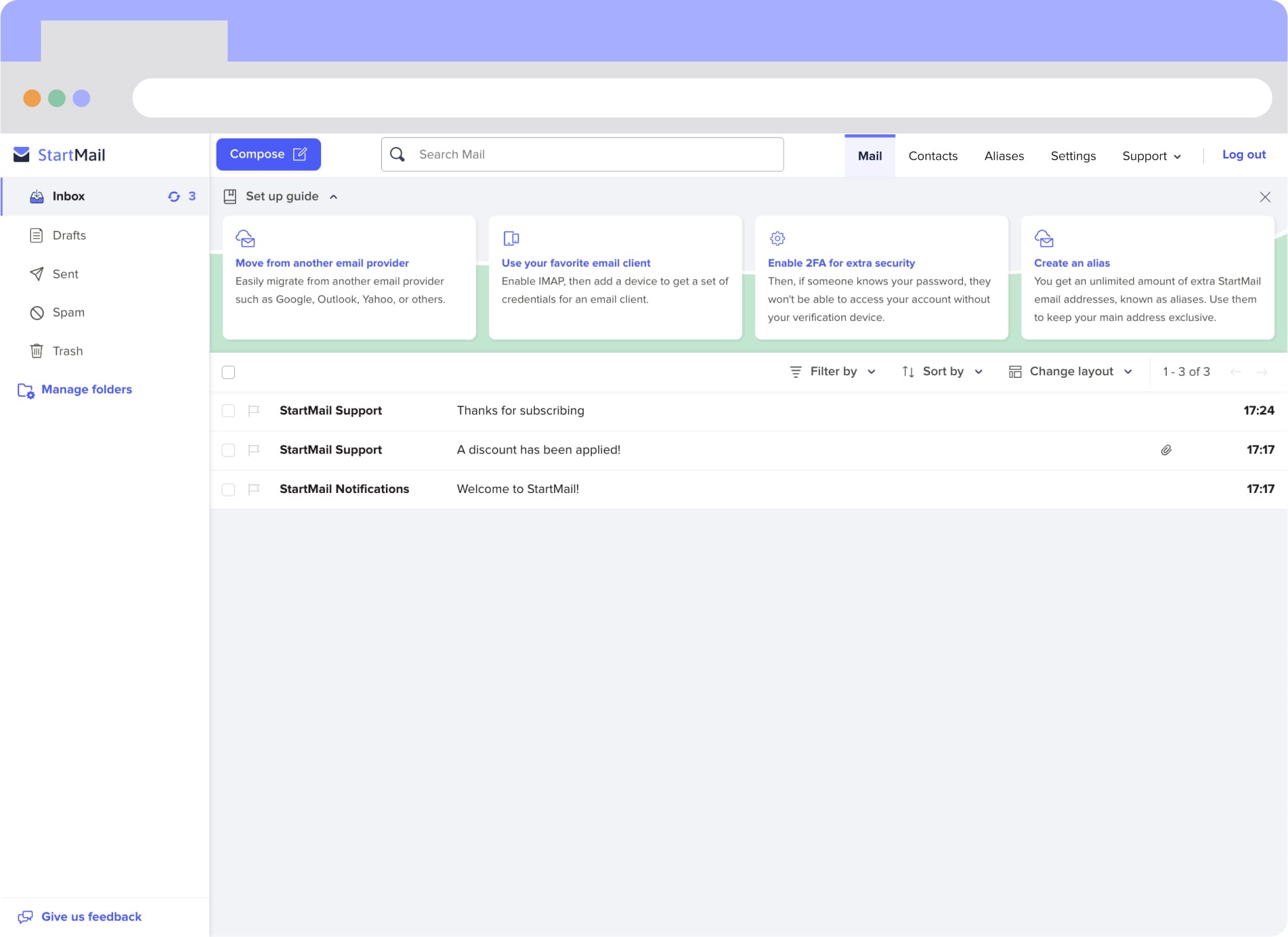
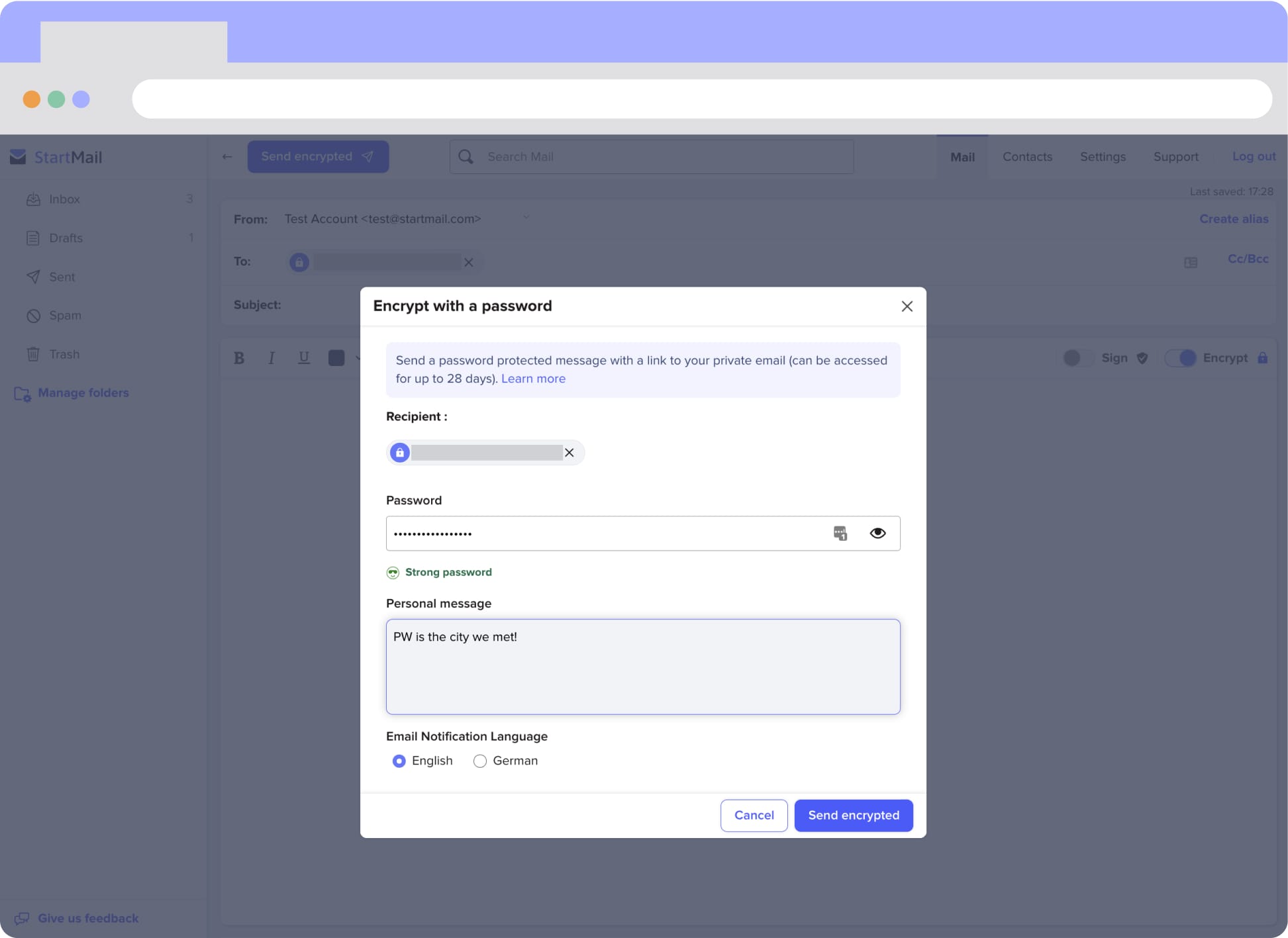
Gallery of email and productivity themed images, including screenshots of inbox organisation, privacy dashboards, and workflow diagrams demonstrating efficient email management.
Privacy & Encryption — What You Really Get
Privacy claims are easy to make — the meaningful question is: what actually happens to your data, who can access your account, and under what conditions?
StartMail takes a clear stance: your inbox is your business — not a marketing asset, not behavioural training data, not fuel for advertising. Proton Mail takes a similar view, but adds more active account-level protection on top.
Here’s how the two compare in practice.
Data handling philosophy
StartMail
StartMail doesn’t scan or monetise your inbox, and your data sits under Dutch GDPR protections, which offer strong user rights over access, erasure, portability, and consent. Its business model is simple: users pay for email, and that removes any incentive to monetise attention or behaviour. GDPR protections give StartMail a strong privacy baseline for user rights and data control.
Proton Mail
Proton Mail is also privacy-first, with no ads and no behavioural profiling, and it’s based in Switzerland — a historically strong privacy jurisdiction. Proton also pairs its encryption model with optional high-risk account protection, like Proton Sentinel, which becomes meaningful if you are likely to be targeted.
Encryption methods
StartMail
StartMail supports PGP encryption, either using your own keys or StartMail-generated ones. Encryption is optional, meaning you choose when to enable it and how much control you want over key management. If you like flexibility and the freedom to use your preferred email client, this feels practical.
Proton Mail
Proton Mail is built around end-to-end encryption (E2EE) by default for messages between Proton Mail users. It’s automatic and frictionless, and users don’t need to handle keys directly. Combined with Proton Sentinel for account access protection, this offers strong security out of the box — especially for users who don’t want to manually manage encryption.
Proton Mail wins on automatic encryption and native apps. If you want a deeper breakdown of how Proton Mail works, including encryption, aliases, apps, and pricing tiers, check out my full Proton Mail deep dive
Tracking protections
| Protection | StartMail | Proton Mail |
|---|---|---|
| IP address hidden in outgoing headers | ✔ | ✔ |
| Tracking pixels blocked | ✔ | ✔ |
| Behavioural scanning for ads | ✘ | ✘ |
| Third-party analytics | ✘ | ✘ |
Both services block major tracking vectors and avoid surveillance-driven business models. Where they differ is how much active protection sits in front of account access.
Jurisdiction & legal protections
StartMail — Netherlands (EU GDPR)
Your inbox sits under GDPR, which gives strong user rights around data processing and consent. For many users, GDPR remains the gold standard of privacy regulation.
Proton Mail — Switzerland (+ optional EU server footprint)
Proton benefits from strong Swiss privacy law, with GDPR-equivalent rights when using EU servers. Combined with user-controlled encryption and Sentinel, this makes Proton one of the most actively protected consumer email platforms.
Real-world implications
If you want privacy that works without configuration, Proton Mail’s built-in end-to-end encryption combined with its optional Sentinel account-protection program gives you a strong baseline of security on paid plans.
If you value control, flexibility, and identity management, StartMail’s PGP support and unlimited aliases offer practical tools that fit everyday privacy needs — especially when you want to decide how and when your real email address is exposed.
Privacy & Encryption — summary at a glance
| Category | StartMail | Proton Mail |
|---|---|---|
| Default encryption | Optional PGP | Built-in E2EE |
| Encryption flexibility | High | Moderate |
| Account-level threat monitoring | ✘ | ✔ (Sentinel) |
| Client/IMAP support | ✔ | Limited |
| Tracker blocking | ✔ | ✔ |
| Jurisdiction | EU GDPR | Swiss + GDPR-equivalent |
| Monetisation risk | None | None |
Bottom line
If you want maximum convenience and protection against account takeovers, Proton Mail’s combination of automatic encryption and the Sentinel program is compelling — especially if you expect targeted attempts or shared account access environments.
If you want flexibility, full identity control through aliases, and the ability to use your own clients without giving up privacy principles, StartMail’s model remains simple, predictable, and genuinely user-centric in 2026.

Pricing & Account Types — What You Actually Get
Unlike many other email services that lure you in with free tiers and then tease paid features behind multiple paywalls, StartMail’s pricing is simple and straightforward — but it is paid only. There’s no permanent free plan beyond a brief trial. That deliberate choice reflects StartMail’s privacy-first business model: your subscription is the only revenue — there’s no ad monetisation or data harvesting.
Here’s how the plans break down as of 2026:
Personal Plan
- Ideal for individual users who want private email without ads or trackers
- Includes:
- 1 email account
- Unlimited disposable aliases
- Custom domain support (send/receive with your own domain)
- PGP encryption options
- 20 GB storage (approx — check StartMail’s pricing page for exact figures)
- Pricing: ~€5 / £4 / $5 per month (billed annually)
This plan fits most people who want a private inbox for everyday use — from personal communication to newsletters and account signups. The unlimited aliases alone are worth the price for anyone tired of spam or data leaks.
Group Plans / Family Plans
StartMail also offers multi-account plans designed for small teams, families, or anyone who wants more than one seat under the same billing:
- Includes multiple StartMail accounts under one subscription
- Each person still gets their own inbox and aliases
- Storage and alias limits are the same per account
- Often comes with discounted pricing compared to buying multiple individual plans
This is handy if you want to protect everyone in a household or set up separate accounts for work and personal use without managing multiple bills.
Business Use
While StartMail doesn’t have the traditional “Business / Enterprise” tiers you see at Google Workspaces or Microsoft 365, you can use StartMail with custom domains and multiple users in a way that works for small teams.
Administrative controls are minimal compared to full hosted email suites, so this model fits best for small teams prioritising privacy over advanced business collaboration features.
How It Compares to Alternatives
Here’s a quick look at how StartMail’s pricing stance stacks up against a couple of notable peers:
| Provider | Free Tier | Paid Plans | Alias Support | Encryption |
|---|---|---|---|---|
| StartMail | ❌ None (trial only) | Simple, all-in pricing | ✔ Unlimited | ✔ PGP (optional) |
| Proton Mail | ✔ Yes | Tiered (Free → Plus → Visionary) | Limited on entry levels | ✔ Built-in E2EE |
| Tutanota | ✔ Yes | Tiered | ✔ Included on paid plans | ✔ Built-in E2EE |
What this means in practice:
- StartMail has no confusing free tier or multiple hidden feature walls — you pay, and you get all privacy features.
- Proton Mail’s free tier is great for basic use, but higher levels of alias support, storage, and protection like Sentinel come on higher paid plans.
- Tutanota offers a free inbox with encryption built in, but its alias and custom domain support are tied to paid tiers.
Is StartMail Worth the Price?
It comes down to what you value:
Yes — if you want:
- genuine privacy without ads or data monetisation
- unlimited disposable aliases
- simple, all-in pricing with no hidden feature gates
- flexibility with IMAP/SMTP clients
Maybe not — if you want:
- a permanent free plan
- native iOS/Android apps (rich mobile clients)
- built-in, automatic end-to-end encryption without setup
StartMail doesn’t try to be everything — it tries to be private, predictable, and owned by you.
How to Choose Between Plans
- Single user with personal needs: Go with the Personal plan — it’s where the value per dollar is strongest.
- Multiple users in one household: The Group plan keeps billing simple and often saves money per seat.
- Small team protecting sensitive comms: StartMail can work, but if you need advanced admin controls or business features (calendars, docs, shared inboxes), pair it with other tools or consider hosted workspace options.
Quick Take
Price is privacy. StartMail doesn’t lock core privacy tech behind multiple tiers — you pay for service, not data mining. That simplicity is refreshing in 2026 when nearly every other email platform prefers complexity or ads.
Using StartMail day-to-day
Email is email — and that’s a compliment here.
If you’re coming from Proton Mail and miss how it handles newsletters or grouping views, I’ve written about that experience in detail in my deep dive into Proton Mail’s newsletters view.
StartMail doesn’t reinvent the inbox (HEY), and it doesn’t overload the UI with options (Outlook).
It delivers private, reliable email with unlimited aliases and a business model that respects the user.
Real-world notes:
- Spam filtering is decent, occasionally cautious
- Web interface is light and quick
- Importing from another provider is straightforward
- Mobile usage relies on your preferred client via IMAP
If you rely on mobile apps, Proton Mail feels smoother.
If you value normal clients and flexibility, StartMail feels more open.
StartMail vs Proton Mail in 2026
| Feature | StartMail | Proton Mail |
|---|---|---|
| Unlimited aliases | ✔ Yes | Limited on lower tiers |
| Default encryption | Optional (PGP) | Automatic (E2EE) |
| Threat monitoring | ✘ | ✔ (Sentinel) |
| Native apps | ✘ | ✔ Yes |
| GDPR protection | ✔ Yes | Optional (EU servers) |
| Pricing | Simple | Tiered |
In short:
Proton Mail wins on apps and encryption convenience.
StartMail wins on aliases, flexibility, and paid-only clarity.
Who should choose StartMail
Choose StartMail if:
- you want private email without ad incentives
- you sign up to lots of services and value aliases
- you prefer IMAP support and your own apps
- you want privacy without an encrypted ecosystem lock-in
Skip it if:
- you want a free account
- you rely heavily on mobile apps
- you want encryption without configuration
Review Scorecard
| Category | Rating |
|---|---|
| Privacy & model | ★★★★★ |
| Aliases & identity control | ★★★★★ |
| UI & usability | ★★★★☆ |
| Encryption | ★★★★☆ |
| Pricing value | ★★★★☆ |
| Overall | 4.5 / 5 |
How we score
Scores are based on hands-on use, publicly documented features, and comparative analysis against other modern email providers. Each review reflects editorial judgement rather than automated testing or user-submitted ratings.
Verdict
StartMail offers a privacy-focused email experience with strong alias management and clear identity controls, built around a predictable, paid-only model. While it lacks some ecosystem breadth, it delivers a quieter inbox and greater user control without unnecessary complexity.
Final thoughts
StartMail won’t appeal to users looking for an all-in-one productivity suite or a constantly expanding feature set. Its focus is narrower — and intentionally so. The service is designed for people who want their email to be boring in the best possible way: reliable, predictable, and free from advertising incentives.
For long-term email use, that clarity of purpose matters. By keeping its business model simple and avoiding data-driven monetisation, StartMail creates an environment where users can manage their inbox and online identity with fewer trade-offs. For anyone rethinking their relationship with mainstream email providers, StartMail represents a calm, deliberate alternative.
Next steps
StartMail offers a short trial period, which makes it easier to test how the service fits your day-to-day email use. A practical approach is to begin with aliases, move one category of services over, and see how the workflow feels before committing fully.
If you choose to try StartMail and would like to support my work, you can do so using the affiliate link below.
Disclosure: This page contains affiliate links…

Try StartMail for 7 Days